 day 52
| microsoft smells $$s 9: microsoft returns |
|
Yesterday, we explained why the exotic PDAs from
Apple and Motorola failed, and why the simpleton devices from HP, AllPen and Psion will succeed. The number one problem of PDA design is packaging. These devices need to fit into your purse, last a long time on a single shot of electrons, and feel good in your hand. In addition, a best-seller must have the power of a real computer, connect to both wires and wireless, and be easy for developers to build applications that make money. The problem is, these are conflicting requirements. Figure 3 shows that packaging and software learning curves simply do not support the needs of the market. In Figure 4, we see that PDA progress will be moderate unless we can ignore the slow progress of packaging and software. It will probably be another decade before the public consumes PDAs like televisions and cars. The limits of innovation have held down the PDA market, and will continue to hold it down for another decade; but the PDA market will revive as the technology catches up with the dream. Microsoft dropped out of the Pen Windows business a few years ago because it could not make enough bang for the buck. Now, Microsoft is back with a highly secret project that will exploit the high installed base of Windows95 machines instead of pushing new technology. The company knows that the PDA market is about to revive.
|
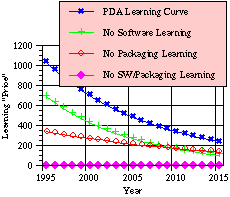
foundation technologies and their use in a PDA. If we ignore software learning, or packaging, or both, we get better forecasts.
course, the best forecast is obtained by ignoring both packaging and software -- two of the major drags on PDA technology. |
microsoft smells $$s
 1
2
3
4
5
6
7
8 1
2
3
4
5
6
7
8
 Daily Dose Index |